England’s Recognition of the Dominicans.El reconocimiento de los dominicanos por Inglaterra.
The New York Herald · New York [N.Y.] · January 7, 1865 · Page 3The New York Herald · New York [N.Y.] · 7 de enero de 1865 · Página 3 View the originalVer el original
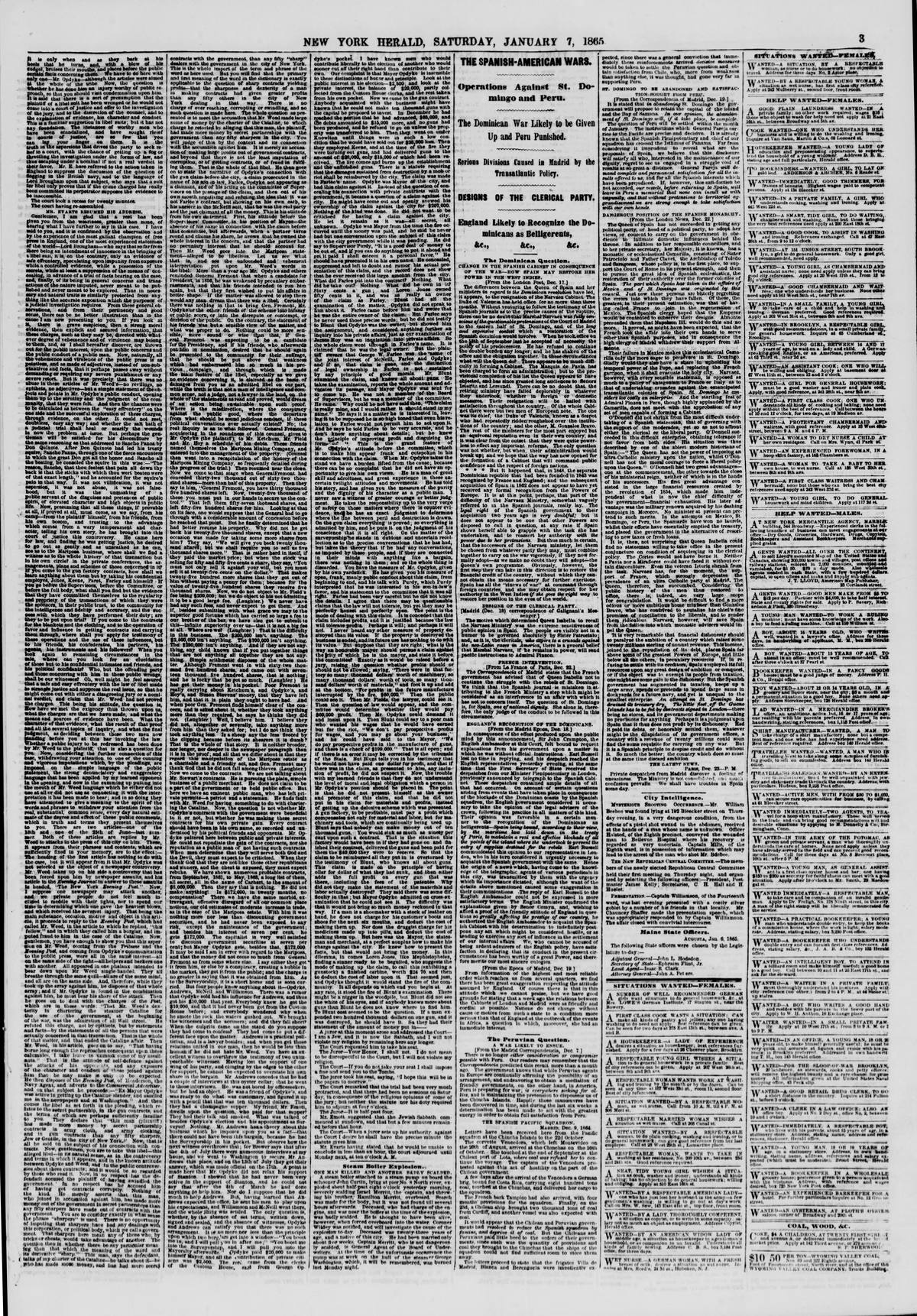
Following public concern over an announcement, English Ambassador Sir John Crampton requested instructions from Earl Russell regarding the Spanish blockade of the Dominican coasts. The English government consulted the legal advisers of the crown, whose opinion was favorable to recognizing the Dominicans as belligerents because Spain was bound by the maritime law of the Treaty of Paris to maintain a real and effective blockade. Earl Russell communicated this legal opinion to the Spanish representative in London, who promptly informed the Spanish government.A raíz de la inquietud pública ante una proclama oficial, el embajador británico Sir John Crampton solicitó instrucciones a Earl Russell sobre el bloqueo español de las costas dominicanas. El gobierno británico consultó a los asesores jurídicos de la Corona, cuyo dictamen fue favorable a reconocer la beligerancia de los dominicanos, por cuanto España estaba obligada en virtud del derecho marítimo del Tratado de París a mantener un bloqueo real y efectivo. Earl Russell trasladó este dictamen jurídico al representante español en Londres, quien lo puso de inmediato en conocimiento del gobierno de Madrid.
FULL TEXT:TEXTO COMPLETO:
The New York Herald January 7, 18657 de enero de 1865
ENGLAND’S RECOGNITION OF THE DOMINICANS.EL RECONOCIMIENTO DE INGLATERRA DE LOS DOMINICANOS.
[From the Madrid Epoca, Dec. 18.][De la Epoca de Madrid, 18 de diciembre.]
In consequence of the effect produced upon the public mind by this announcement, Sir John Crampton, the English Ambassador at this Court, felt bound to request explanations from his government upon a matter in which he was without official instructions. Earl Russell lost no time in replying, and his despatch reached the English representatives yesterday evening, at the same time that the First Secretary of State received the despatches from our Minister Plenipotentiary in London, previously announced by telegraph to the Spanish Cabinet. These despatches contained ample details of all that had occurred. On account of certain questions arising from events that have taken place in consequence of the blockade of the Dominican coasts by the Spanish squadron, the English government considered it necessary to take the opinion of the legal advisers of the crown, following its practice in all matters of this kind. Their opinion was favorable in a certain manner to the recognition of the Dominicans as belligerents—Spain being bound, according to their view, by the maritime law laid down in the treaty of Paris, to maintain a real and effective blockade of all the points of the island where she undertook to prevent the entry of supplies destined for the rebels. Earl Russell communicated this opinion to our representative in London, who in his turn considered it urgently necessary to acquaint the Spanish government with the same. Hence the origin of a news which, having come to the knowledge of the telegraphic agents of various periodicals in this city, was transmitted by them with the urgency which its importance dictated, although the want of the details above mentioned caused some exaggeration in their communications. The reply of Earl Russell to the English Ambassador could not be expressed in more satisfactory terms. The English Minister confirmed the explanations given by Senor Comyn, and, wishing to afford a proof of the friendly attitude of England in questions so greatly affecting the prestige of our country, he authorized the English Ambassador to acquaint the Spanish Cabinet with his determination to indefinitely postpone any act which might be considered hostile, or as tending to exercise any sort of influence in the settlement of our internal affairs. We, who cannot be accused of being ardent admirers of the English policy, have satisfaction in declaring that its conduct in the present circumstances has been worthy of a great Power, and therefore merits our most sincere eulogies.En consecuencia del efecto producido sobre la mente pública por este anuncio, Sir John Crampton, el Embajador inglés en esta Corte, se sintió obligado a solicitar explicaciones de su gobierno sobre un asunto en el cual estaba sin instrucciones oficiales. El Conde Russell no perdió tiempo en responder, y su despacho llegó a los representantes ingleses ayer por la noche, al mismo tiempo que el Primer Secretario de Estado recibió los despachos de nuestro Ministro Plenipotenciario en Londres, previamente anunciados por telégrafo al Gabinete español. Estos despachos contenían detalles amplios de todo lo que había ocurrido. Por cuenta de ciertas cuestiones surgidas de eventos que han tenido lugar en consecuencia del bloqueo de las costas dominicanas por la escuadra española, el gobierno inglés consideró necesario tomar la opinión de los asesores legales de la corona, siguiendo su práctica en todos los asuntos de esta clase. Su opinión fue favorable en cierta manera al reconocimiento de los dominicanos como beligerantes —España estando obligada, según su vista, por la ley marítima establecida en el tratado de París, a mantener un bloqueo real y efectivo de todos los puntos de la isla donde emprendió impedir la entrada de suministros destinados a los rebeldes. El Conde Russell comunicó esta opinión a nuestro representante en Londres, quien a su vez consideró urgentemente necesario hacer saber al gobierno español lo mismo. De aquí el origen de una noticia que, habiendo llegado al conocimiento de los agentes telegráficos de varios periódicos en esta ciudad, fue transmitida por ellos con la urgencia que su importancia dictaba, aunque la falta de los detalles arriba mencionados causó alguna exageración en sus comunicaciones. La respuesta del Conde Russell al Embajador inglés no podría ser expresada en términos más satisfactorios. El Ministro inglés confirmó las explicaciones dadas por el Señor Comyn, y, deseando dar una prueba de la actitud amistosa de Inglaterra en cuestiones que afectan tan grandemente el prestigio de nuestro país, autorizó al Embajador inglés a hacer saber al Gabinete español su determinación de posponer indefinidamente cualquier acto que pudiera ser considerado hostil, o como tendiente a ejercer cualquier clase de influencia en el arreglo de nuestros asuntos internos. Nosotros, que no podemos ser acusados de ser admiradores ardientes de la política inglesa, tenemos satisfacción en declarar que su conducta en las presentes circunstancias ha sido digna de una gran Potencia, y por tanto merece nuestros elogios más sinceros.