A Republic Looking for RecognitionUna república en busca de reconocimiento
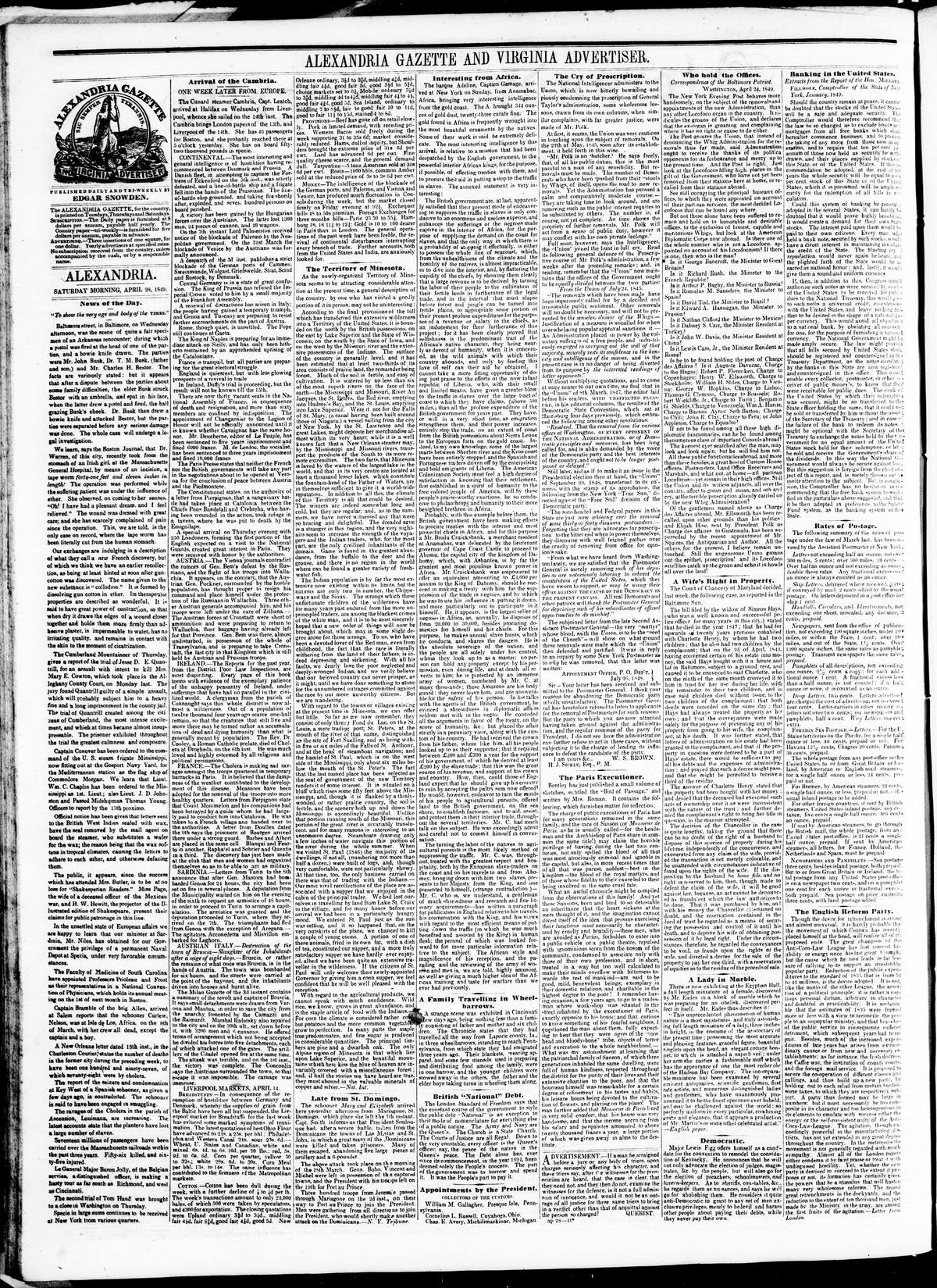
Late from St. Domingo.Noticias recientes de Santo Domingo.
President Soulouque captured the Dominican towns of Las Matas and St. John following a severe battle on March 18, resulting in numerous Dominican casualties, prisoners, and abandoned artillery. Generals Bobo, Vincent, and Michel were left in possession of the captured towns while the President departed for Port-au-Prince on March 19. Additionally, troops and men were gathering from various directions to join the President in preparation for another anticipated attack on the Dominicans.
A partir del fragmento publicado, el presidente Soulouque se apoderó de las villas dominicanas de Las Matas y San Juan tras un reñido combate librado el 18 de marzo, saldado con copiosas bajas, prisioneros y trenes de artillería abandonados por los dominicanos. Los generales Bobo, Vincent y Michel quedaron al mando de las poblaciones ocupadas, al tiempo que el gobernante salía rumbo a Puerto Príncipe el 19 de marzo. Entretanto, contingentes y reclutas confluían desde distintos puntos para incorporarse a las fuerzas presidenciales ante la previsión de una nueva ofensiva contra los dominicanos.
The Dominican Republic.La República Dominicana.
Recounting twenty-two years of Haitian rule over the Spanish portion of the island of Santo Domingo, the paper states that the sons of the colonists in the plains of Seybo and Vega rose under Pedro Santana, fought three or four decisive battles, and drove Soulouque and his forces back to the west, where they have been kept for ten consecutive years. Having maintained the Dominican Republic under a liberal constitution, the Dominicans ask the United States for the moral aid of friendly recognition as what the paper calls the only free white self-governing American state in the West Indies. The editorial laments that after nine years this request remains unanswered, neglecting an opportunity to bring the republic into the American system as a center of resistance to the European policy of "Africanizing" the islands.
Un editorial del Washington Sentinel critica la negativa de los Estados Unidos a reconocer la independencia de la República Dominicana. Al relatar veintidós años de dominio haitiano sobre la parte española de la isla de Santo Domingo, el periódico afirma que los hijos de los colonos en las llanuras de El Seibo y La Vega se levantaron bajo el mando de Pedro Santana, libraron tres o cuatro batallas decisivas y rechazaron a Soulouque y sus fuerzas hacia el oeste, donde han sido contenidos durante diez años consecutivos. Habiendo mantenido la República Dominicana bajo una constitución liberal, los dominicanos solicitan a los Estados Unidos el apoyo moral de un reconocimiento amistoso para lo que el diario denomina el único Estado americano libre, blanco y autónomo en las Antillas. El editorial lamenta que, al cabo de nueve años, esta solicitud siga sin respuesta, desaprovechando la oportunidad de integrar la república al sistema americano como núcleo de resistencia frente a la política europea de «africanizar» las islas.
A Visit to the Island.Una visita a la isla.
It says the account ended with a truce said to be consolidating into peace.
El periódico ofrece un relato dramático y con marco racial propio de la época sobre un ataque a un pueblo dominicano por una partida liderada por uno de los capitanes de Soulouque después de que Santana izara la bandera de la independencia dominicana, y sobre jinetes locales que reunieron a los residentes para una lucha cuerpo a cuerpo. Dice que el relato terminaba con una tregua que se consolidaba en paz.
Late from St. Domingo.
Cape Haytien-Haiti.Cabo Haitiano-Haití.
Since I last had the pleasure, in the month of January, Haiti was reposing in the sweet sleep of confidence and tranquility, and we all looked forward to a season of renewed life a…
Cape Haytien—Haiti.Cabo Haitiano—Haití.
Affairs in the Haytien Empire—Negro Respect for a Flag of Truce—To al Overthrow of the Black Troops under Pierot, &c. When I last had this pleasure, in the month of January, Haiti …
FROM PORT AU PLATT—By the Hero, Boyd, arrived last night in eight days from Port au Platt, we learn that everything was tranquil in that place when she left. Business was entirely at a stand still. The other portions of the island were in a fine condition, but from want of attendance would fall short, on account of the planters being engaged in the revolution. The following is the capitulation between the French and Spaniards of Hayti:—DESDE PORT AU PLATT—Por el Hero, Boyd, llegado anoche en ocho días desde Port au Platt, sabemos que todo estaba tranquilo en ese lugar cuando partió. Los negocios estaban completamente paralizados. Las demás partes de la isla estaban en buen estado, pero por falta de atención quedarían por debajo, a causa de que los hacendados estaban ocupados en la revolución. La siguiente es la capitulación entre los franceses y los españoles de Haití:—
This day March 14th, 1844, the members of the Commission appointed by J. Beuchot, the moment the Haytien flag was lowered, to treat with the Junta of the Dominican republic, and th…
Recent Riots in Hayti.Disturbios recientes en Haití.
The following letter, which the Journal of Commerce ascribes to an intelligent source at Port au Plata, Hayti, gives the most connected view of the recent events in that distracted…
Late from HaytiNoticias recientes de Haití
The New-York daily tribune reported that Port au Prince and the South were submissive to Guerrier's Government, and that ex-President Hérard and his kinsman were ordered to leave the island after his troops were beaten by the Dominicans. The newspaper also noted the presence of several naval vessels, including five French brigs-of-war and a steamer, the British frigate Spartan, and the U.S. sloop \1, alongside reports that the vessel \1 had sheltered American Consul Mr. Usher and numerous refugees during tumults.
El New-York daily tribune reportó que Puerto Príncipe y el Sur se encontraban sumisos al gobierno de Guerrier, y que el expresidente Hérard y su pariente recibieron la orden de salir de la isla tras la derrota infligida a sus fuerzas por los dominicanos. El diario registró asimismo la presencia de diversas unidades navales, entre ellas cinco bergantines de guerra y un vapor franceses, la fragata británica Spartan y la balandra de guerra estadounidense \1, junto con informes de que la nave \1 había brindado asilo al cónsul estadounidense, Sr. Usher, y a múltiples refugiados durante las revueltas.
Late from Hayti.Noticias recientes de Haití.
According to the June 15, 1844 issue of the Daily National Intelligencer, Gurrier was proclaimed President of the North on the 18th, with plans to erect the island's divisions into States similar to the United States and potentially propose that the Dominicans join as a State. The newspaper reported that the ex-President and Herard Dumesle were ordered to be banished to Jamaica, that Aux Cayes and the South remained submissive, and that no new expedition was currently designed against the Dominicans, who had severely beaten Herard’s troops. Additionally, it noted unconfirmed talk of a treaty between the Dominicans and France, the arrival of the British frigate Spartan from Port au Prince, and the presence of the U.S. sloop \1 at Aux Cayes.
Conforme al ejemplar del 15 de junio de 1844 del Daily National Intelligencer, Gurrier fue proclamado presidente del Norte el día 18, proyectando estructurar las demarcaciones insulares en estados a semejanza de Estados Unidos y plantear en su caso que los dominicanos se integrasen en calidad de estado. El periódico refirió que se dispuso el confinamiento en Jamaica del expresidente y de Herard Dumesle, que Aux Cayes y el Sur acataban la autoridad y que no se preparaba de momento ninguna expedición contra los dominicanos, quienes habían desbaratado a los destacamentos de Hérard. Además, aludió a negociaciones no confirmadas de un tratado dominicano con Francia, al arribo de la fragata británica Spartan desde Puerto Príncipe y a la estancia de la corbeta estadounidense \1 en Aux Cayes.
HaytiHaití
The Government of the 3d of May, at the head of which is General Philippe Guerrier, an old soldier of the first army, which, under Dessalines, achieved the independence of the coun…
A late arrival at New York from Port-au-Platte reports that the Spanish part of the island had just formed a new governmentUna llegada reciente a Nueva York desde Port-au-Platte informa que la parte española de la isla acababa de formar un nuevo gobierno
It also says ex-President Boyer, at Jamaica, has given up all idea of returning to Haiti, and ex-President Herard is also making arrangements to establish himself there.
También dice que el expresidente Boyer, en Jamaica, ha abandonado toda idea de regresar a Haití, y que el expresidente Herard también hace arreglos para establecerse allí.
From St. Domingo.Desde Santo Domingo.
The newspaper reported that the legal Junta reinstated by General Santa Ana had ceded Samana to the French, a move opposed by the faction led by President Duarte. Meanwhile, the French were actively engaging Port-au-Prince and Cape Haytien to create a diversion against the East, while General Santa Ana marched on St. Domingo with an army, was made President, and was reported to favor French protection.
El periódico informó que la Junta legal reinstaurada por el general Santana había traspasado Samaná a los franceses, disposición resistida por el bando del presidente Duarte. Entre tanto, los buques franceses hostilizaban Puerto Príncipe y Cabo Haitiano con el fin de propiciar una distracción frente a la región oriental, al tiempo que el general Santana se dirigía sobre Santo Domingo al frente de un ejército, asumía la presidencia y se manifestaba partidario de la tutela francesa.
From Hayti.Desde Haití.
The newspaper reports that a French squadron was waiting at Port-au-Prince for an indemnity installment, though funds were scarce. It also states that General Accau, leader of the late revolution in Aux Cayes, was decoyed to Port-au-Prince by President Gurriere and made prisoner upon arrival. Additionally, patriots in the Spanish part of the island rejected French protection, while Dominican President General Santa Anna's movements suggested he might retain his post and form a confederacy with Gurriere's government.
El diario refiere que una escuadra naval gala aguardaba en Puerto Príncipe la liquidación de una entrega de la indemnización pactada, si bien los caudales eran escasos. Da cuenta asimismo de que el general Accau, cabecilla del reciente levantamiento en Aux Cayes, fue conducido con ardides a Puerto Príncipe por el presidente Gurriere y puesto en prisión apenas desembarcó. Por su lado, los patriotas de la sección española repudiaban el protectorado francés, mientras que las resoluciones del presidente dominicano, el general Santana, presagiaban su permanencia en el mando y la concertación de un pacto federativo con el gobierno de Gurriere.
From Our European Correspondent.De nuestro corresponsal europeo.
M. THIERS has brought up his Report from the Commission on the Deputies on the Education Bill as fashioned by the Peers. It is a grand tractate, which occupied nearly three hours i…
From St. Domingo.Desde Santo Domingo.
The Daily National Intelligencer reported that the project to divide the island into states was abandoned, leaving the government restored to its pre-revolution status minus municipalities, with Port au Prince serving as the capital and Port au Platt maintaining the Dominican flag. Additionally, authorities at Port au Platt arranged a treaty granting the French a patent for the Samana mines, though it was expected to fail due to popular opposition, while President Guerriere was on an island tour expected to reach Cape Haytien.
El Daily National Intelligencer consignó que la iniciativa de erigir estados en la isla quedó desestimada, restituyéndose el orden administrativo existente con anterioridad a la rebelión salvo en las municipalidades, con Puerto Príncipe en calidad de capital y Puerto Plata desplegando el pabellón dominicano. Paralelamente, las autoridades de Puerto Plata estipularon un convenio otorgando a los franceses la concesión minera de Samaná, cuya ratificación se juzgaba inviable por el rechazo popular, al paso que el presidente Guerrier recorría el país con destino a Cabo Haitiano.
Important from St. Domingo.Importante desde Santo Domingo.
The newspaper reported that the island of St. Domingo remained in a very unsettled state due to an expected attack by the Haytiens, with General Boewavo recalled to the capital and succeeded by General St. Jagn. Additionally, Spaniards were being appointed to office in place of Dominicans, and every possible effort was being made to defend the town.
El diario comunicó que la isla de Santo Domingo permanecía en profunda inestabilidad frente a la expectativa de una incursión haitiana, habiéndose llamado a la capital al general Boewavo, a quien relevó el general St. Jagn. Al mismo tiempo, se designaba a funcionarios españoles en reemplazo de servidores dominicanos y se redoblaban las providencias para asegurar la defensa de la plaza.
Three more ara now in the course of erection one steamshipTres más están ahora en curso de construcción un buque de vapor
The \1 reported on January 24, 1845, that commissioners from the Dominican Republic had arrived in New York to solicit from the United States a recognition of their independence from the Haytien Government. Additionally, the newspaper noted that the Danish Government was taking measures to abolish slavery in St. Thomas and Santa Cruz, and reported on developments regarding Texas involving President Jones and American Consul General Duff Green.
El \1 participó el 24 de enero de 1845 el arribo a Nueva York de delegados de la República Dominicana con el encargo de recabar de Estados Unidos el reconocimiento de su separación del gobierno haitiano. Notificó además que la corona danesa promovía disposiciones tendientes a suprimir la esclavitud en Saint Thomas y Santa Cruz, ofreciendo asimismo pormenores relativos a Texas en torno al presidente Jones y al cónsul general norteamericano Duff Green.
From St. Domingo.Desde Santo Domingo.
The newspaper reported that the part of the island belonging to the Haytien government was under martial law amid great excitement, numerous arrests, the execution of several adherents of Herard, and a scarcity of coffee caused by men being drafted as soldiers. It was rumored at Port Republican that a revolution in St. Domingo had expelled Gen. Santana from the Presidency and elevated Regia Mota to the office. Additionally, a letter from Rio de Janeiro dated February 9, 1845, claimed the Brazilian government was daily insulting the American minister, consul, officers, and flag.
El periódico expuso que la porción insular bajo potestad del gobierno haitiano se hallaba sujeta al estado de sitio en medio de honda conmoción, reiteradas detenciones, el suplicio de adeptos a Hérard y desabastecimiento de café debido a las levas militares forzosas. Trascendió en Port Republicain la especie de que una insurrección en Santo Domingo depuso de la presidencia al general Santana, promoviendo en su lugar a Regla Mota. Por lo demás, un despacho fechado en Río de Janeiro el 9 de febrero de 1845 aseveraba que la corte brasileña ultrajaba de continuo a la legación, al cónsul, a los mandos navales y a la insignia estadounidense.
HAYTI AND ST. DOMINGO.Haití y Santo Domingo.
The notice explains that Columbus named the northern part of the island Hispaniola, the French later took possession of the western portion and called it St. Domingo, and after both Spaniards and French were ousted, the colored race gave the name Hayti to the whole island. Since the expulsion of President Boyer, the eastern and western portions have separated into the Dominican Republic, with its capital at the city of St. Domingo, and the Haytien Republic, with its capital at Port Republican, formerly Port au Prince. The paper notes that applying the name St. Domingo to the whole island is improper.
El Daily National Intelligencer reproduce una nota del New York Commercial Advertiser que aclara los nombres de la isla para evitar una confusión frecuente. El texto explica que Colón dio el nombre de La Española a la parte norte de la isla, los franceses tomaron luego posesión de la porción occidental y la llamaron Santo Domingo, y tras la expulsión de españoles y franceses, la raza de color dio el nombre de Haití a toda la isla. Desde la expulsión del presidente Boyer, las porciones oriental y occidental se han separado en la República Dominicana, cuya capital es la ciudad de Santo Domingo, y la República Haitiana, cuya capital es Puerto Republicano, antes Puerto Príncipe. El periódico señala que aplicar el nombre de Santo Domingo a toda la isla es impropio.
HAYTI AND ST. DOMINGO.Haití y Santo Domingo.
According to the article, Columbus gave the name Hispaniola to the northern part where he landed, the French subsequently occupied the western portion and called it St. Domingo, and the colored race later ousted both Spaniards and French and named the whole island Hayti. Since the expulsion of President Boyer, the eastern and western portions have separated into the Dominican Republic, with St. Domingo as its capital, and the Haytien Republic, with Port Republican, formerly Port au Prince, as its capital. The item adds that the name St. Domingo is still sometimes improperly applied to the entire island.
La Alexandria Gazette reproduce un párrafo del New York Commercial Advertiser que reseña los nombres geográficos de la isla. Según el artículo, Colón dio el nombre de La Española a la parte norte donde desembarcó, los franceses ocuparon posteriormente la porción occidental y la llamaron Santo Domingo, y la raza de color expulsó más tarde tanto a españoles como a franceses y llamó Haití a toda la isla. Desde la expulsión del presidente Boyer, las partes oriental y occidental se han separado en la República Dominicana, con Santo Domingo como capital, y la República Haitiana, con Puerto Republicano, antes Puerto Príncipe, como capital. La nota añade que el nombre de Santo Domingo todavía se aplica a veces impropiamente a toda la isla.
Hayti and St. Domingo.Haití y Santo Domingo.
The piece notes that Columbus named the northern part Hispaniola, the French later took possession of the western portion and called it St. Domingo, and the colored race subsequently ousted both Spaniards and French and gave the name Hayti to the whole island. Since the expulsion of President Boyer, a separation of the eastern and western portions has established the Dominican Republic in the east, with the city of St. Domingo as its capital, and the Haytien Republic in the west, with Port Republican, formerly Port au Prince, as its capital. The article remarks that applying the name St. Domingo to the whole island is improper.
El Weekly National Intelligencer reproduce una nota del New York Commercial Advertiser destinada a evitar la frecuente confusión de nombres respecto a la isla. El texto señala que Colón llamó La Española a la parte norte, los franceses tomaron luego posesión de la porción occidental y la llamaron Santo Domingo, y la raza de color expulsó posteriormente a españoles y franceses y dio el nombre de Haití a toda la isla. Desde la expulsión del presidente Boyer, la separación de las porciones oriental y occidental ha establecido la República Dominicana en el este, con la ciudad de Santo Domingo como capital, y la República Haitiana en el oeste, con Puerto Republicano, antes Puerto Príncipe, como capital. El artículo observa que aplicar el nombre de Santo Domingo a toda la isla es impropio.
From the New York Commercial Advertiser, The Arkansas State Gazette reprintsDel New York Commercial Advertiser, The Arkansas State Gazette reproduce
It states that Columbus gave the name Hispaniola to the northern part where he landed, the French later occupied the western portion and called it St. Domingo, and the colored race eventually ousted both Spaniards and French and applied the name Hayti to the whole island. Following the expulsion of the Haytien president, the eastern and western portions separated into the Dominican Republic, with its capital at the city of St. Domingo, and the Haytien Republic, with its capital at Port Republican, formerly Port au Prince. The excerpt concludes that applying the name St. Domingo to the entire island is improper.
La Arkansas State Gazette reproduce una nota del New York Commercial Advertiser que ofrece información para evitar la frecuente confusión de nombres en la isla. Expone que Colón dio el nombre de La Española a la parte norte donde desembarcó, los franceses ocuparon posteriormente la porción occidental y la llamaron Santo Domingo, y la raza de color expulsó con el tiempo tanto a españoles como a franceses y aplicó el nombre de Haití a toda la isla. Tras la expulsión del presidente haitiano, las porciones oriental y occidental se separaron en la República Dominicana, cuya capital es la ciudad de Santo Domingo, y la República Haitiana, cuya capital es Puerto Republicano, antes Puerto Príncipe. El extracto concluye que aplicar el nombre de Santo Domingo a toda la isla es impropio.
Hayti.Haití.
It also reports a fight on June 24 about 60 miles from Port Republican in which the Haitians had three men killed, and that the Haitian President had thrown some officers into prison over how the troops behaved.
También informa de un combate el 24 de junio a unas 60 millas de Puerto Republicano en el que los haitianos tuvieron tres muertos, y de que el presidente haitiano había encarcelado a algunos oficiales por la conducta de las tropas.
The paper reports Haitian forces cleared a section of attackers, returned to their former quarters at Fort CachimanEl periódico informa que las fuerzas haitianas despejaron una sección de atacantes y regresaron a sus antiguos cuarteles en Fort Cachiman
Residents who had fled in anticipation of the Dominicans' approach were invited to return to their homes and peaceful pursuits with protection assured.
El periódico informa que fuerzas haitianas despejaron una sección de atacantes, regresaron a sus antiguos cuarteles en Fort Cachiman, y el general Morisset emitió una orden anunciando la tranquilidad restablecida en Las Matas. Los residentes que habían huido ante la esperada llegada de los dominicanos fueron invitados a regresar a sus hogares y ocupaciones pacíficas con protección asegurada.
Captain Eldridge of the schooner Josephine Ann, arriving from Port-au-Prince, reported that a Haitian army 15,000El capitán Eldridge de la goleta Josephine Ann, al llegar de Port-au-Prince, informó que un ejército haitiano de 15,000 hombres
The inhabitants of Port-au-Prince were in great consternation at the news, business was dull, and several Danish vessels were loading tobacco for Europe.
El capitán Eldridge de la goleta Josephine Ann, llegado de Puerto Príncipe, informó que un ejército haitiano de 15.000 hombres había sorprendido de noche una pequeña aldea dominicana y asesinado a todos sus habitantes, y que los dominicanos habían proclamado la ley marcial y reunido 10.000 soldados para marchar al encuentro de los haitianos. Los habitantes de Puerto Príncipe estaban muy consternados por la noticia, los negocios estaban flojos y varios buques daneses cargaban tabaco para Europa.
Read the eraLeer la era
For Dominicans, these were years of survival: repeated Haitian invasions beaten back, an army the treasury could barely pay for, and governments in Santo Domingo asking the world to treat independence as a fact rather than a pause between occupations. The lesson of the period is double: the country was being taken seriously abroad for the first time, and it was already being priced.Para los dominicanos, fueron años de supervivencia: repetidas invasiones haitianas rechazadas, un ejército que el tesoro apenas podía pagar y gobiernos en Santo Domingo que pedían al mundo tratar la independencia como un hecho y no como una pausa entre ocupaciones. La lección del período es doble: el país era tomado en serio en el extranjero por primera vez, y ya estaba siendo tasado.