Collapse and the Customs QuestionColapso y la cuestión de las aduanas
The Assassination and the War of SuccessionEl asesinato y la guerra de sucesión
Heureaux was assassinated at Moca in July 1899, and the American papers printed his obituary as an indictment. The revolutionists' statement, carried at length, charged fourteen years of government by terrorizing: more than three hundred citizens clandestinely shot without trial, no legal election since 1889. Within days the succession was a war. Insurgents cut the telegraph wires near Santiago and Moca, generals went over to Juan Isidro Jiminez, American warships sailed to protect American interests, and by September Vasquez held the capital as provisional president, ready to hand power to Jiminez.
Heureaux fue asesinado en Moca en julio de 1899, y los periódicos estadounidenses imprimieron su obituario como una acusación. La declaración de los revolucionarios, publicada extensamente, denunciaba catorce años de gobierno mediante el terror: más de trescientos ciudadanos fusilados clandestinamente sin juicio, ninguna elección legal desde 1889. En pocos días, la sucesión fue una guerra. Los insurgentes cortaron los cables telegráficos cerca de Santiago y Moca, los generales se pasaron a Juan Isidro Jiminez, los buques de guerra estadounidenses zarparon para proteger los intereses estadounidenses, y para septiembre Vásquez ocupaba la capital como presidente provisional, listo para entregar el poder a Jiminez.
The Creditors Move InLos acreedores entran en escena
The fighting paused; the debt did not. The San Domingo Improvement Company of New York held the railroads and the right to collect the customs under its contract with Heureaux, and within days of the assassination its secretary warned that if the new administration repudiated those contracts the company would call on Washington for protection as American citizens. By 1901 nationalist pressure had compelled President Jiminez to confront the company and threaten its agent with expulsion, while Belgium's foreign minister instructed his consul to keep the bondholder funds in the treasury safe protected for European creditors.
Los combates se detuvieron; la deuda, no. La San Domingo Improvement Company de Nueva York poseía los ferrocarriles y el derecho de cobrar las aduanas bajo su contrato con Heureaux, y a los pocos días del asesinato su secretario advirtió que, si la nueva administración repudiaba esos contratos, la compañía pediría protección a Washington como ciudadanos estadounidenses. Para 1901, la presión nacionalista había obligado al presidente Jiminez a confrontar a la compañía y amenazar a su agente con la expulsión, mientras el ministro de Relaciones Exteriores de Bélgica instruía a su cónsul a mantener protegidos, para los acreedores europeos, los fondos de los bonistas en la caja del tesoro.
Revolution as the Method of SuccessionLa revolución como método de sucesión
Revolution became the method of succession. In May 1902 the capital surrendered to Vasquez and Jiminez took refuge in the French consulate. In 1903 the cycle turned again: Santiago fell to insurgents behind Jiminez, and in November the capital stood invested and bombarded, President Woss y Gil refusing to capitulate, a German warship ready to land troops, and the American minister refusing the rebels recognition.
La revolución se convirtió en el método de sucesión. En mayo de 1902 la capital se rindió a Vásquez y Jiminez se refugió en el consulado francés. En 1903 el ciclo giró de nuevo: Santiago cayó ante insurgentes partidarios de Jiminez, y en noviembre la capital estaba sitiada y bombardeada, con el presidente Woss y Gil negándose a capitular, un buque de guerra alemán listo para desembarcar tropas y el ministro estadounidense negando el reconocimiento a los rebeldes.
Gunboats, Arbitration, and a Receiver in SightCañoneras, arbitraje y un receptor a la vista
In 1904 the creditors' file became a naval one. American warships bombarded insurgents at Pajarito and landed marines who re-embarked; Washington refused President Morales permission to blockade his own ports against American shipping; and an arbitral award that July empowered the United States, on default, to assume control of four northern ports through a fiscal agent. By December the price of the next step was printed plainly: acting as Dominican receiver, the United States might acquire the use of a coaling station on Samana Bay. At home, each default moved decisions from Santo Domingo to foreign capitals.
En 1904 el expediente de los acreedores se convirtió en un expediente naval. Buques de guerra estadounidenses bombardearon a los insurgentes en Pajarito y desembarcaron marines que volvieron a embarcar; Washington denegó al presidente Morales el permiso para bloquear sus propios puertos contra la navegación estadounidense; y un laudo arbitral de ese julio facultó a Estados Unidos a asumir, en caso de incumplimiento, el control de cuatro puertos del norte mediante un agente fiscal. Para diciembre, el precio del paso siguiente estaba impreso con claridad: actuando como receptor dominicano, Estados Unidos podría adquirir el uso de una estación carbonera en la bahía de Samaná. En casa, cada incumplimiento mudaba las decisiones de Santo Domingo a capitales extranjeras.
PlatesLáminas
San Domingo Affairs.
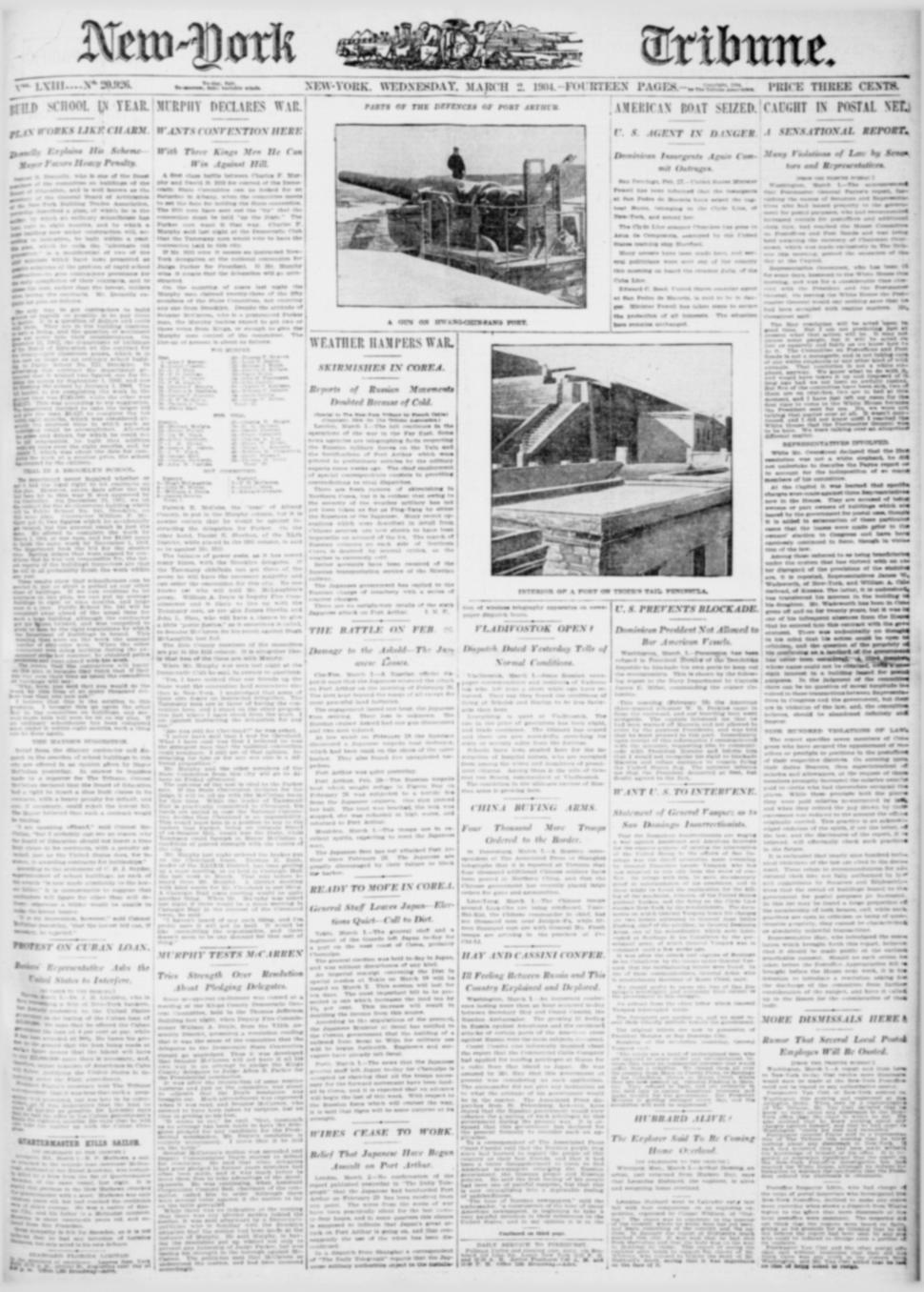
U.S. Prevents Blockade.
Key articlesArtículos clave
Santo Domingo's President Who Was an Autocrat and Despot Slain.El presidente de Santo Domingo, que era un autócrata y déspota, asesinado.
Secret assassination was another of his favorite methods of heading off plots, and insurrections were nipped in the bud by almost indiscriminate executions; men were sent on journeys of state and never reached their destinations, and others were arrested and nothing more heard of their fate. Three years ago General Castillo, Minister of War, thought the opportunity favorable for starting a revolution for his own benefit: there was some trouble in the province, and Castillo got 1,000 rifles from the President on the plea of sending them to the province to put down the rebellion — of course, Castillo saw that they fell into the hands of his friends. Heureaux was for a time fooled, but discovered what was going on; he ordered General Estay, governor of the province, to execute Castillo, but the order was not carried out; by a neat stratagem the President enticed Castillo to the capital and arrested him, and the Minister was put aboard a war ship and taken to the province, where he was shot, and General Estay, surprised and protesting, was executed also because he had not obeyed orders. During the past two years Heureaux had lively times with the Jimenes insurrection that would not completely down, although he succeeded in driving Jimenes and General Morales out of the country; despotism was wearing on the people, and Heureaux was waning a bit in popular favor, and besides, Heureaux was piling up the national debt of the country.
El asesinato secreto era otro de sus métodos favoritos de cortar las conspiraciones, y las insurrecciones eran cortadas de raíz por ejecuciones casi indiscriminadas; los hombres eran enviados a viajes de estado y nunca llegaban a sus destinos, y otros eran arrestados y nada más se supo de su suerte. Hace tres años el general Castillo, ministro de Guerra, creyó favorable la oportunidad para comenzar una revolución para su propio beneficio: había algún disturbio en la provincia, y Castillo consiguió 1,000 rifles del Presidente con el pretexto de enviarlos a la provincia para sofocar la rebelión — por supuesto, Castillo se aseguró de que cayeran en manos de sus amigos. Heureaux estuvo por un tiempo engañado, pero descubrió lo que estaba pasando; ordenó al general Estay, gobernador de la provincia, ejecutar a Castillo, pero la orden no se llevó a cabo; por una estratagema ingeniosa el Presidente atrajo a Castillo a la capital y lo arrestó, y el Ministro fue puesto a bordo de un buque de guerra y llevado a la provincia, donde fue fusilado, y el general Estay, sorprendido y protestando, fue ejecutado también porque no había obedecido las órdenes. Durante los últimos dos años Heureaux tuvo tiempos animados con la insurrección de Jimenes que no se dejaba sofocar por completo, aunque logró expulsar a Jimenes y al general Morales del país; el despotismo estaba cansando al pueblo, y Heureaux estaba perdiendo un poco de favor popular, y además, Heureaux estaba acumulando la deuda nacional del país.
San Domingo Affairs.Asuntos de Santo Domingo.
The New-York Tribune reported that nationalist pressure compelled President Jimenes to confront the San Domingo Improvement Company and threaten its agent with expulsion after the company challenged Dominican customs authority. Meanwhile, Belgian Foreign Minister de Favereau instructed his consul in Santo Domingo to ensure that bondholder funds in the treasury safe remained strictly protected for European creditors. Additionally, the semi-official Dominican press responded defiantly to rumors that the American gunboat Scorpion was en route to coerce the government.
El New-York Tribune informó que presiones nacionalistas obligaron al presidente Jimenes a confrontar a la San Domingo Improvement Company y a amenazar a su agente con la expulsión después de que la empresa desafiara la autoridad aduanera dominicana. Mientras tanto, el ministro de Asuntos Exteriores belga, De Favereau, instruyó a su cónsul en Santo Domingo para que garantizara que los fondos de los tenedores de bonos en la caja fuerte de la tesorería permanecieran estrictamente resguardados para los acreedores europeos. Asimismo, la prensa semioficial dominicana respondió con desafío a los rumores de que el cañonero estadounidense Scorpion se dirigía a coaccionar al gobierno.
U.S. Prevents Blockade.Estados Unidos impide el bloqueo.
The New-York Tribune reported allegations by General Francisco Leonte Vásquez that Dominican insurgents deliberately targeted Americans to provoke armed United States intervention. Vásquez claimed government troops discovered incriminating letters at Santiago de los Caballeros written by revolutionary Governor Desiderio Arias to rebel leader Juan Isidro Jimenes. According to Vásquez, these documents explained the deadly attack on machinist Johnson of the USS Yankee and the gunfire directed against the American steamer New York.
El New-York Tribune informó sobre las denuncias formuladas por el general Francisco Leonte Vásquez en el sentido de que los insurgentes dominicanos atacaban deliberadamente a estadounidenses para provocar una intervención armada de los Estados Unidos. Vásquez afirmó que las tropas del gobierno hallaron cartas incriminatorias en Santiago de los Caballeros escritas por el gobernador revolucionario Desiderio Arias al líder rebelde Juan Isidro Jimenes. Según Vásquez, estos documentos explicaban el ataque mortal contra el maquinista Johnson del USS Yankee y los disparos dirigidos contra el vapor estadounidense New York.
ErasEras · The era's articlesLos artículos de la era · On the timelineEn la cronología